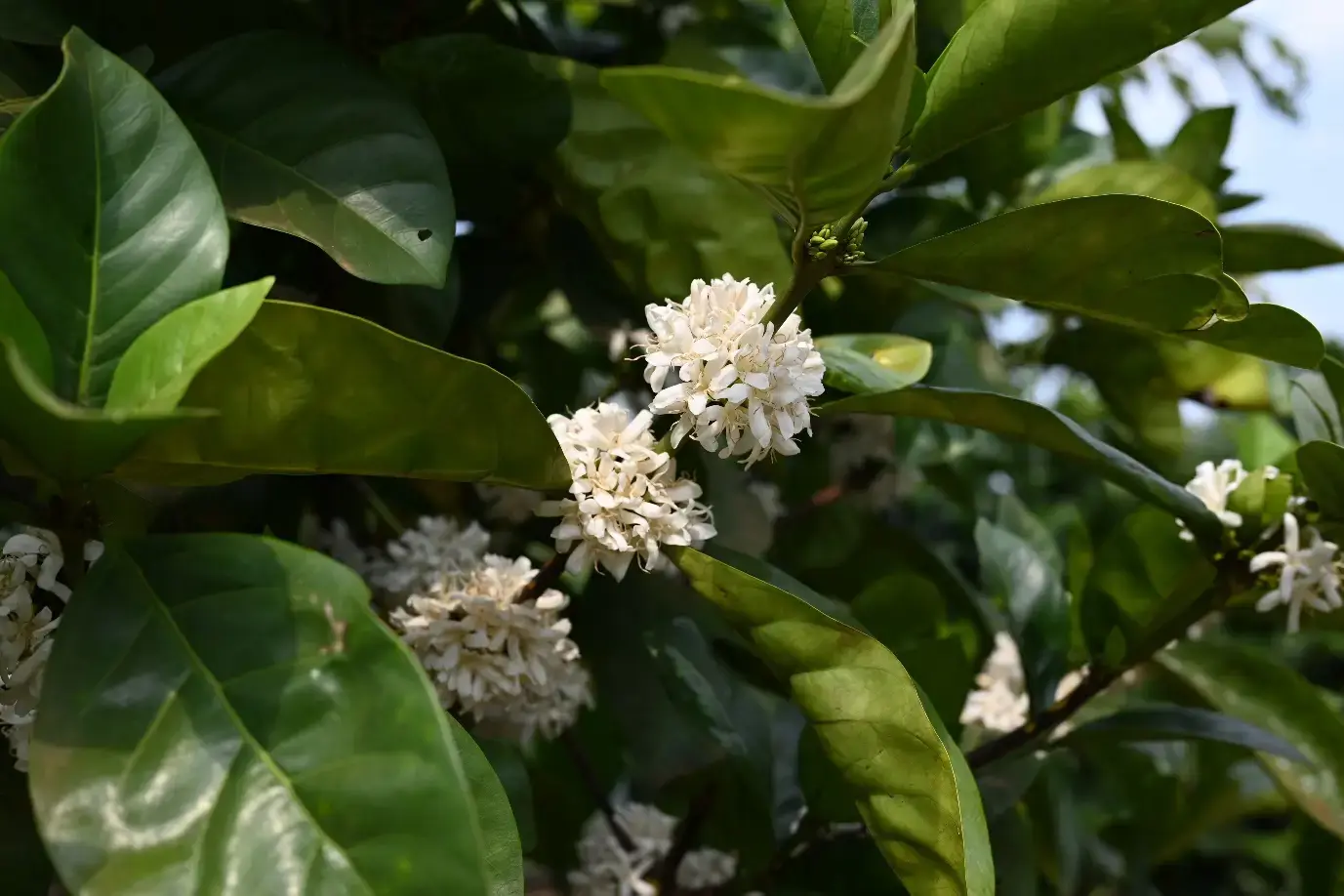
Our Green Coffee Selection
The future of coffee begins with new species, varieties, and climate-resilient cultivation. We focus on the cultivation and trade of climate-resilient coffee. This includes, for example, Arabica grown in climate-resilient farming systems such as agroforestry, as well as Excelsa (Coffea dewevrei)—a rare coffee species that is significantly more resistant to heat, drought, and climate stress. For roasteries, this opens up new flavor profiles and a climate-resilient supply chain—for farmers, a long-term perspective.
› Ambe Anaerobic Arabica Uganda — 36h Anaerobic
Ambe Anaerobic is a specialty Arabica from a farmer-led cooperative in Uganda's West Nile region, near the border with the Democratic Republic of Congo. Often described as the pet-nat of our coffees, Ambe undergoes a 36-hour anaerobic fermentation before being naturally dried on raised beds and carefully hand-sorted. The result is a distinctively wild, funky natural profile where winey aromatics meet regional notes of dark cocoa and stone fruit.
Climate resilient
Climate projections show that coffee production in Uganda's West Nile region will be strongly affected by climate change. To keep coffee viable as an income source for rural households, farmers are supported in building regenerative growing systems with healthier soils, better water retention, and more shade. In one of Uganda's hottest regions, regenerative agriculture is a critical adaptation strategy and reduces dependence on costly synthetic fertilizers.
Socially responsible
The West Nile region has historically seen little investment. The microstation system keeps value creation with farmers, with each station operated by an elected committee. Farmers sell their cherries at two thirds above the living-income reference price for Ugandan Arabica, creating stable paid work in rural villages where employment opportunities are scarce.
› Amizi Rock Arabica Uganda — Fully Washed
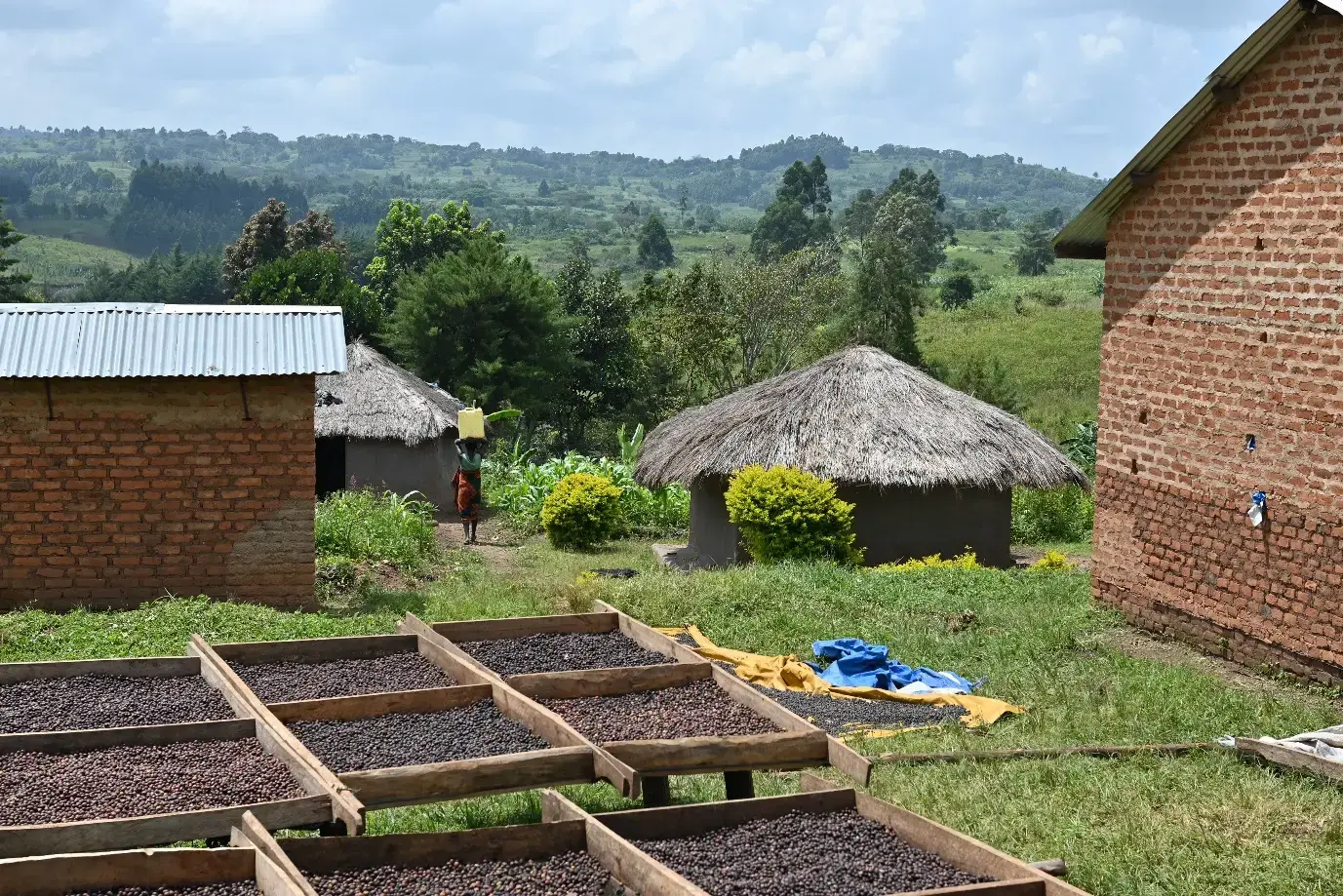
Amizi Rock, named after a distinctive rock next to the microstation, is a specialty Arabica from Uganda's West Nile region. Grown by smallholder farmers in regenerative systems near the border with the Democratic Republic of Congo, the coffee is processed at the Gonyobendo microstation, a farmer-led station that secures consistent quality and local value creation. The beans are dried on raised beds and carefully hand-sorted, resulting in a clear, lively cup with bold nutty notes, licorice, fresh lime, and a soft sugar-syrup sweetness.
Climate resilient
Climate projections show that coffee production in Uganda's West Nile region will be strongly affected by climate change. To keep coffee viable as an income source for rural households, farmers are supported in building regenerative growing systems with healthier soils, better water retention, and more shade. In one of Uganda's hottest regions, regenerative agriculture is a critical adaptation strategy and reduces dependence on costly synthetic fertilizers.
Socially responsible
The West Nile region has historically seen little investment. The microstation system keeps value creation with farmers, with each station operated by an elected committee. Farmers sell their cherries at two thirds above the living-income reference price for Ugandan Arabica, creating stable paid work in rural villages where employment opportunities are scarce.

› Disco 3 Arabica Uganda — 72h Anaerobic
Disco 3 is a specialty Arabica from Uganda's West Nile region, grown on high-altitude slopes near the border with the Democratic Republic of Congo. Processed at the Jukia microstation, where experimental anaerobic fermentations push aroma boundaries, Disco 3 undergoes a 72-hour anaerobic fermentation. The beans are then naturally dried on raised beds and carefully hand-sorted. The result is a vivid, expressive cup with sparkling acidity and layered complexity: rich cocoa, warm spices, fizzy cola, and juicy peach.
Climate resilient
Climate projections show that coffee production in Uganda's West Nile region will be strongly affected by climate change. To keep coffee viable as an income source for rural households, farmers are supported in building regenerative growing systems with healthier soils, better water retention, and more shade. In one of Uganda's hottest regions, regenerative agriculture is a critical adaptation strategy and reduces dependence on costly synthetic fertilizers.
Socially responsible
The West Nile region has historically seen little investment. The microstation system keeps value creation with farmers, with each station operated by an elected committee. Farmers sell their cherries at two thirds above the living-income reference price for Ugandan Arabica, creating stable paid work in rural villages where employment opportunities are scarce.
› Excelsa Natural Excelsa Uganda — Natural
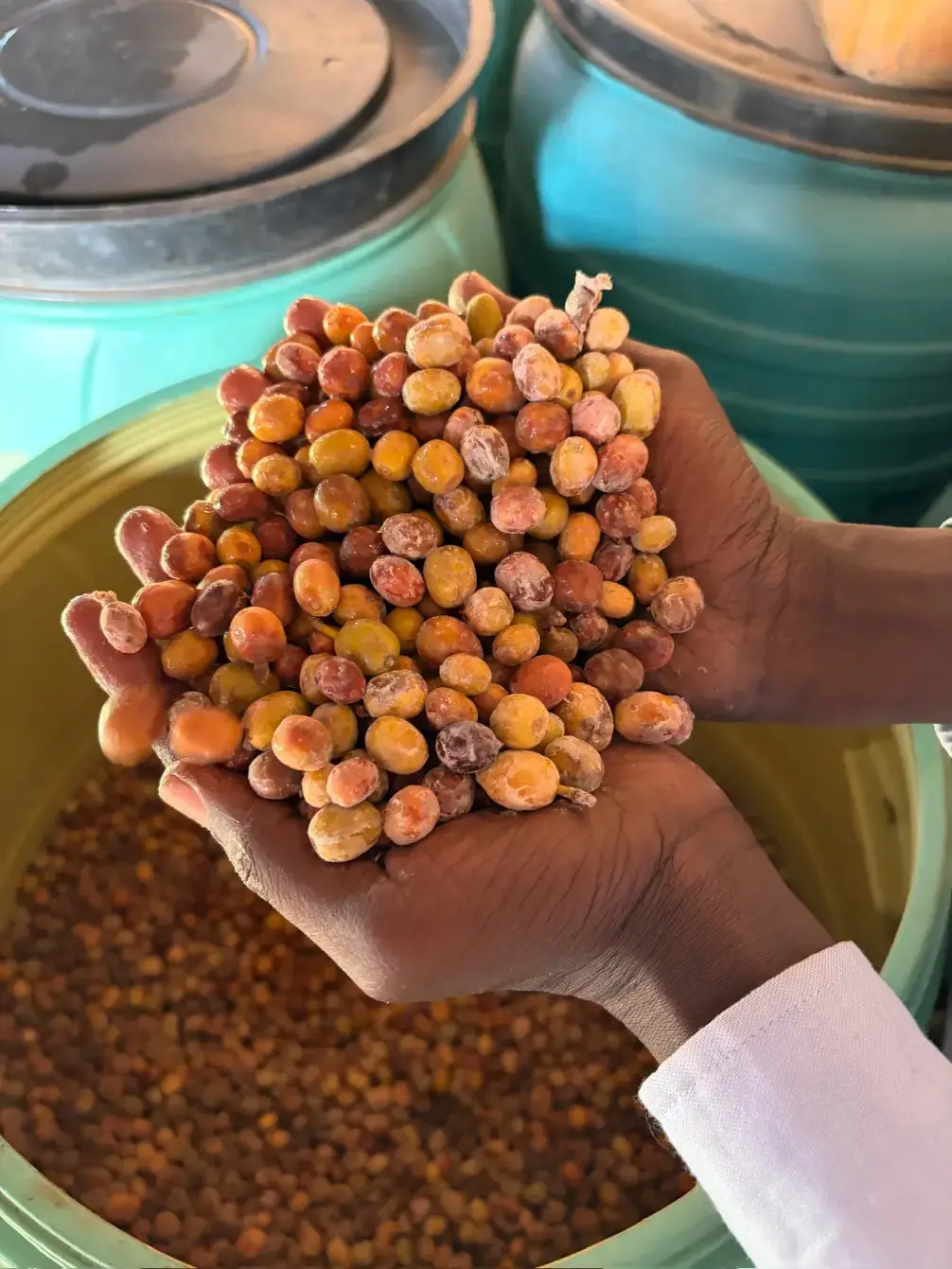
Excelsa (Coffea dewevrei) is native to Uganda and has traditionally been grown in the Zirobwe region. Together with the Uganda Coffee Farmers Alliance, HyCoffee supports farmers in improving cultivation, harvesting, and processing practices so Excelsa can reach a higher quality level for the European market. This increases income while strengthening climate resilience. Natural drying lets Excelsa's character shine: a sweetness unlike Arabica or Robusta, with notes of kefir, maple syrup, bright blood orange, and soft chocolate. As quality improvement is still at an early stage, the current level is commercial rather than specialty, making it especially interesting for climate-resilient blends and dark-roast profiles.
Climate resilient
Excelsa thrives at higher temperatures and lower humidity than Arabica or Robusta and is less susceptible to common pests and diseases. When grown alongside Robusta or Arabica, it reduces the risk that one climate shock affects every crop at the same time because the species differ in growth cycle and harvest timing. Higher and more reliable yields also give farmers more stable income and more room to invest in climate adaptation.
Socially responsible
Our Excelsa comes from a cooperative network in central Uganda. Together with producers, we improve quality and test new experimental processing methods. We create direct market access to Europe, where Excelsa has traditionally played only a small role. HyCoffee pays producers 200 percent of the price they previously received for Excelsa, supporting higher incomes, more diversified production, and a more resilient future.